
When you step into a modern trade show booth, a retail space, or even a corporate lobby, one thing stands out right away: the ultra-clean displays. You’ll see bright, smooth fabric visuals with no wrinkles, no shine, and no distracting hardware. Those are SEG fabric banners, and they’ve quietly become the go-to choice for B2B brands that want sharp, professional presentation at events and in their everyday spaces.
What is SEG Fabric?
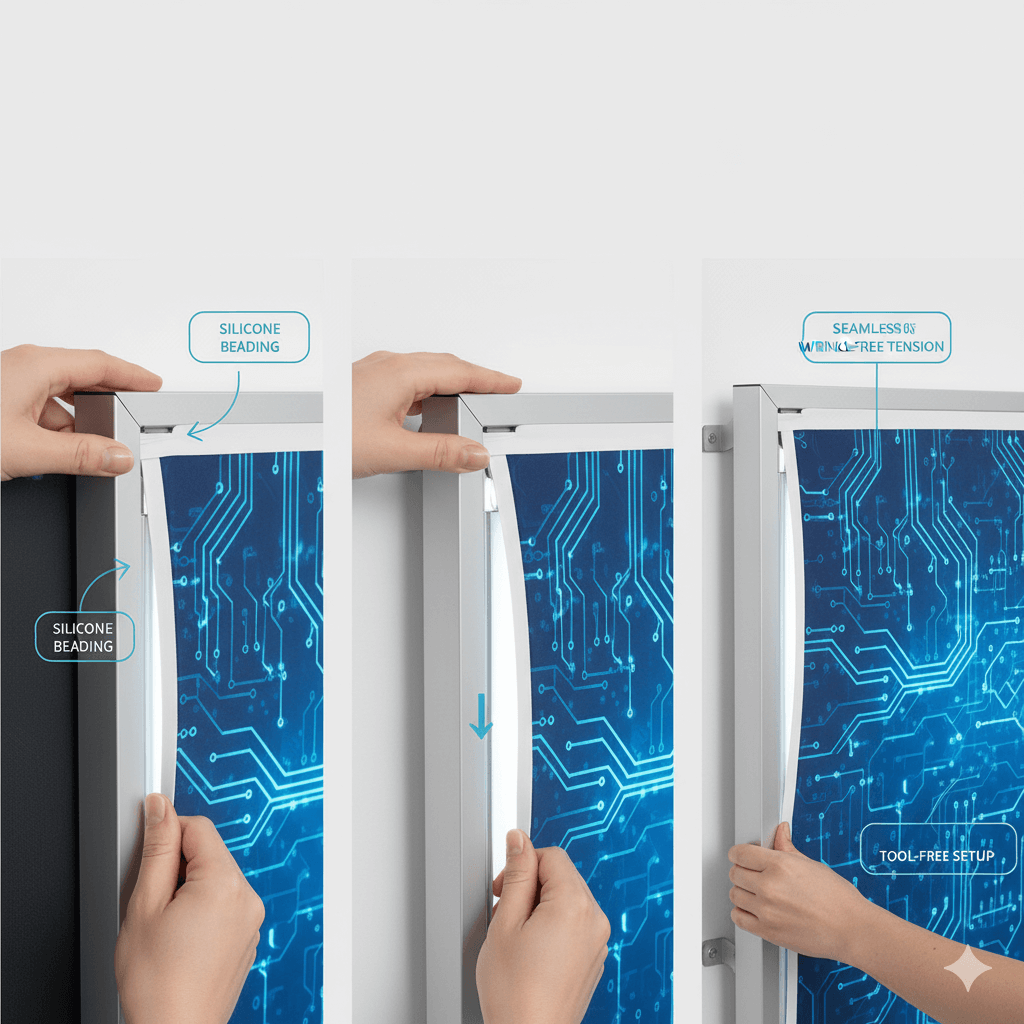
Silicone Edge Graphics use a printed fabric panel with a slim silicone strip stitched around the edges. That strip slides into a channel in the SEG frame, pulling the fabric tight and giving the display a clean, borderless look. The finish feels polished and premium.
What really sets SEG banners apart for B2B teams is how easy they are to work with. You don’t need tools, installers, or extra steps. They go up fast, look sharp, and keep your setup process simple.
What SEG Fabric Banners Deliver
Professional Look That Builds Trust
In B2B settings, your display often serves as your first handshake. It’s the moment people decide whether your brand feels polished or forgettable. SEG fabric banners give you a top-tier look without the price tag of high-end custom builds.
The fabric prints deliver rich, accurate color and avoid the glare you usually get with vinyl. In rooms full of decision-makers, that matters. A smooth, wrinkle-free graphic shows that your team values precision and presents itself well, which helps set the right tone from the start.
Portability Built Into the Design
A 7 by 7 foot SEG display weighs about 20 pounds. It’s light enough for one person to move, yet still delivers a strong visual presence. In contrast, rigid panel systems often run 45 to 60 pounds and usually need freight handling and a crew to set them up.
This lighter build gives you clear advantages:
- Lower shipping costs: typical ground rates fall between $25 and $55 compared to $150 to $300 for rigid displays
- More flexibility: you can load multiple SEG setups into a personal vehicle for local or regional events
- Faster setup: you can install everything yourself without waiting on contractors during load-in
For teams hitting four to six shows a year, these savings build up quickly in both cost and time.
The Easy Setup Advantage
This is one of the biggest reasons SEG banners have become a favorite for B2B exhibitors. The setup is fast and straightforward:
- Unbox the frame pieces
- Snap the corner sections together
- Attach the side rails
- Line up the fabric graphic
- Press the silicone edge into the frame channel, starting at each corner
That’s the whole process. No tools, no hardware, no learning curve.
For solo exhibitors or small teams juggling multiple shows, this ease of use makes a huge difference. You can walk into a venue, set everything up on your own, and be ready well before the show opens—without paying 100 to 300 dollars per event for installation help.
Graphic Flexibility and Easy Updates
B2B messaging shifts often. New product features, fresh case studies, seasonal pushes. Traditional displays make those changes costly, since you usually have to replace the entire unit or stick with outdated content.
SEG banners make updates simple. You just push the silicone edge out of the frame channel, remove the old print, and press the new one in. No tools involved and no risk of damaging the frame. A new graphic usually runs between 300 and 800 dollars, compared to 1,500 dollars or more for replacing a full rigid display.
This gives your team room to:
- Try different messages at different shows
- Refresh case studies or testimonials every few months
- Rotate seasonal or campaign-driven visuals
- Keep product details current without a major spend
Storage, Transport, and Setup
What Makes SEG Banners Truly Portable
Foldable Frame Design
SEG frames use hinged corner connectors that let the structure collapse to roughly a third of its full height. A 7×7 foot frame can fit into a slim case about 4x4x84 inches, which makes it easy to transport in a car trunk.
Lightweight Aluminum Build
These systems use aluminum instead of steel, reducing weight while staying durable. A full 10×10 booth setup comes in around 48 pounds, light enough for two people to move without strain.
Purpose-Built Carrying Cases
Most high-quality SEG kits include a fitted carrying case with molded foam inserts. Hard-shell options are available if you ship displays nationwide or exhibit often.
Modular Scalability
You can start with a single 8×8 foot frame and expand as your booth needs grow. Additional frames can be added to build larger layouts without replacing your original system, which makes this approach ideal for growing B2B teams.
Storage Best Practices (And Mistakes to Avoid)
The most important rule: always roll your fabric graphics instead of folding them. Folds create creases that can become permanent and ruin the clean look you paid for.
Store graphics in the right environment:
- Keep temperatures between 60 and 75°F
- Maintain 40 to 60 percent humidity to avoid mold or fabric distortion
- Keep them out of direct sunlight to prevent fading
- Use climate-controlled spaces whenever you can
Taking care of the frame:
Store aluminum frames upright on a rack and avoid stacking heavy items on top. Aluminum lasts a long time, but proper storage helps extend the life of your setup.
How long graphics last:
Dye-sublimated prints usually hold up for three to five years with good care. UV-printed graphics last two to three years and are a bit more sensitive to heat and humidity.
Transport Options for B2B Exhibitors
Regional events: Carry an 8×8 foot SEG display in your own vehicle. The full kit weighs around 25 pounds in its case, so no freight services needed.
National shows: Use insured ground shipping with tracking. Delivery is typically five to seven business days, and the lighter weight helps keep shipping costs down.
Multi-event tours: If you exhibit four to six times a year, you can move two or three full setups using a dedicated vehicle or by bundling shipments with a logistics partner.
Choosing the Right Size and Configuration for Your B2B Needs
Start with an 8 by 8 foot Display
For most first-time B2B exhibitors, an 8×8 foot SEG wall is the ideal entry point. It fits neatly inside a standard 10×10 booth, leaves space for a table or demo setup. One person can handle it easily, and you can add a second unit later if you move into a 10×20 space.
Recommended Setups by Industry
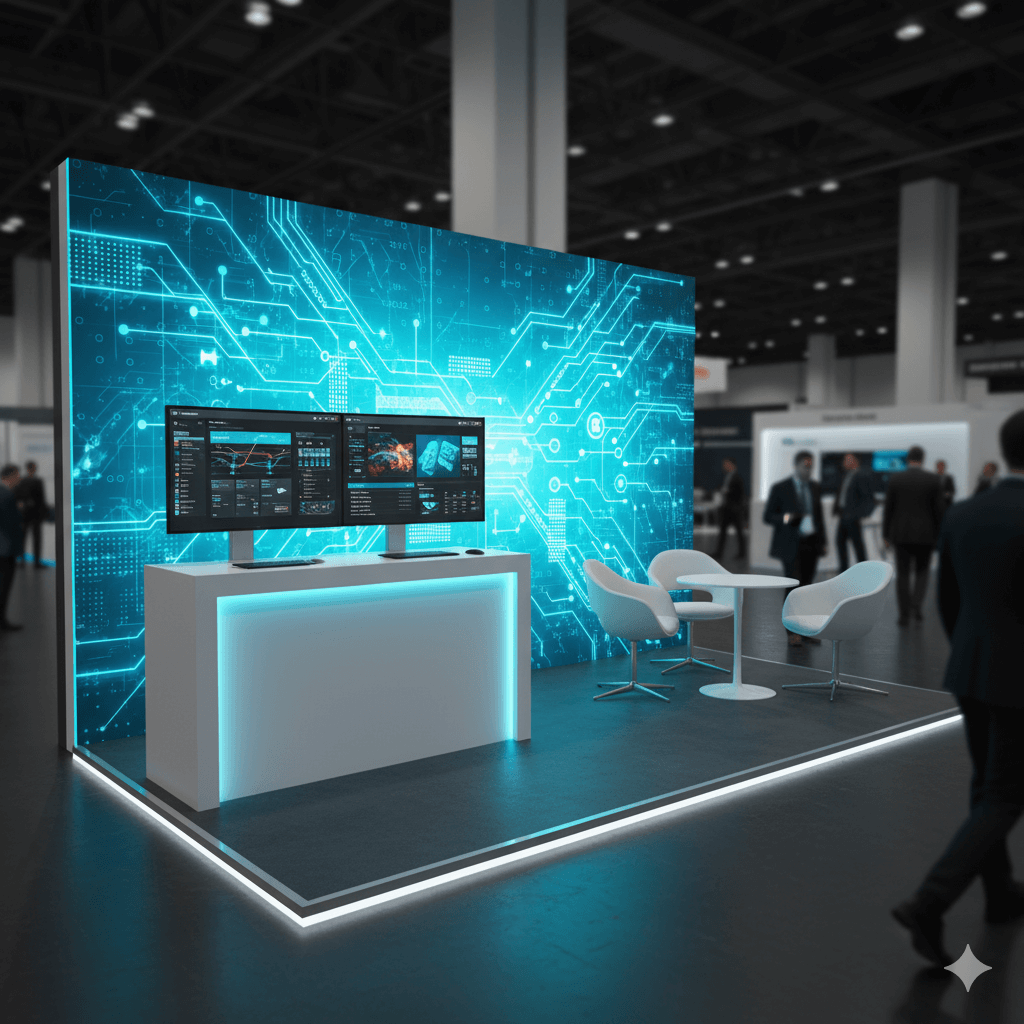
Tech and SaaS (10×10 booth)
- One 8 by 8 foot SEG wall
- Demo table below the graphic
- Two or three chairs for conversations
- Optional monitor mount for live demos
Consulting and Professional Services (10×10 booth)
- One 8 by 8 foot SEG wall showcasing case studies or ROI proof points
- A tall cocktail table for quick, standing discussions
- Clean, minimal layout to keep the focus on conversations

Product-Focused B2B Exhibitors (10×20 trade show booth)
- Two 8 by 8 foot displays positioned side by side or back to back
- Shelving for product samples
- Interactive add-ons like QR codes, spec sheets, or sample stations

SEG Solutions are Sustainability
More B2B teams are factoring environmental impact into vendor evaluations, and SEG systems perform well on that front. Over a ten-year span, the differences are significant:
Environmental Impact Comparison – SEG vs Vinyl
| Metric | SEG Fabric (Dye-Sublimation) | Vinyl Banner (Traditional Printing) |
| Water used (per kg of fabric) | 5 milliliters | 100–200 liters |
| Water usage reduction | 40,000x less water than traditional dyeing | Baseline (high water use) |
| Chemicals used (relative) | Minimal | High (chemical runoff) |
| Wastewater produced | None | High (polluted wastewater) |
| Carbon emissions (relative) | Low | Medium |
| Environmental impact | Avoids water pollution, no chemical runoff | Releases toxic effluent, water contamination |
Sources: Wooter, Home Science Journal, Science Direct
Why This Should Matter To You?
- Supports ESG goals: Shows clients you take environmental standards seriously
- Saves money: Less waste and fewer replacements reduce long-term costs
- Longer lifespan: SEG graphics often last five years or more, compared to two to three years for vinyl
- Fully recyclable: The polyester fabric and aluminum frames can go through standard recycling channel.
Getting Started
SEG fabric banners work because they respect your time and budget while delivering professional results. Whether you’re exhibiting at your first trade show or managing a national tour, the combination of quality, portability, and ease makes sense.
To explore portable SEG fabric banner options designed for professional B2B environments, check out Mobile Light Box’s banner solutions. Their modular systems support everything from compact tabletop displays to full-size booth backdrops, all with the tool-free assembly and portability that busy B2B professionals appreciate.
FAQs
